When people picture foreclosure they picture losing the house. What they rarely picture is the part that actually costs them money: the house sells either way — the question is who runs the sale, and for how much.
Why the two numbers differ
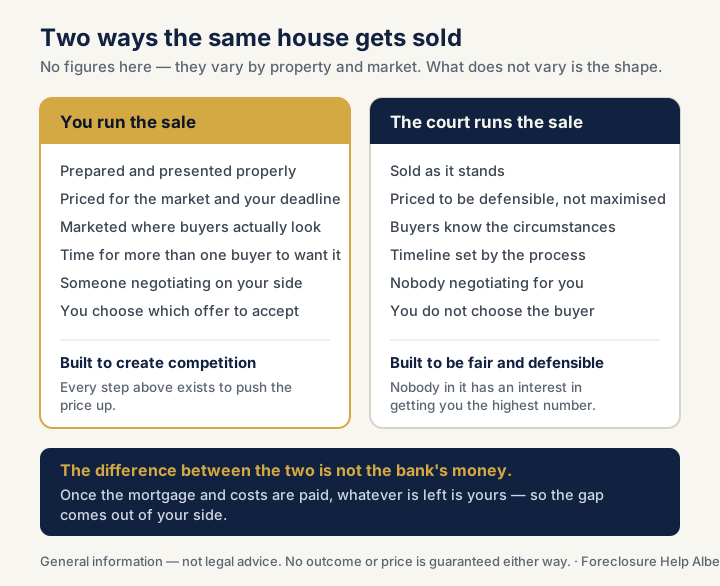
A normal sale is built to attract competition. The home is prepared, photographed, priced against comparable properties, listed where buyers actually look, and left on the market long enough for more than one person to want it. Every one of those steps exists to push the price up.
A court-supervised sale is built to be defensible. It has to be fair and properly conducted — but nobody in that process has a financial interest in getting you the highest possible number. The lender needs to recover what it is owed. Once that is covered, the pressure to push further largely disappears.
On top of that, buyers know. A property being sold through a foreclosure process is not a secret, and buyers price that knowledge into their offers. Motivated seller, constrained timeline, limited negotiation — that is a discount, and it is a rational one from their side.
Where the difference goes
This is the part worth sitting with. If your home sells for more than the total of what is owed plus the costs of the process, the surplus is yours. It does not go to the lender. It does not disappear into the court.
So the difference between a well-marketed sale and a court sale is not the bank's money being protected. It is your money, either kept or lost. And the costs of the legal process — which grow the longer it runs — come out of the same pot.
The catch: this only works while there is time
Selling properly takes weeks, not days. Preparation, listing, showings, an accepted offer, a buyer's financing, then closing through lawyers. Each of those has its own timeline and none of them speeds up because you need it to.
Which is why the redemption period matters so much. It is a window in which you can still sell the property yourself, and homeowners who use it are selling a house. Homeowners who wait it out are having one sold for them. Here is where that window sits in the Alberta process.
When a court sale genuinely is the outcome
Sometimes there is no equity to protect. If the mortgage and the costs exceed what the home would realistically fetch, then a marketed sale does not rescue anything, and the honest answer is that the difference between the two paths is small. That is worth knowing early rather than discovering it after months of effort — and it changes what you should be focusing on, which may be the shortfall question rather than the sale.
The only way to know which situation you are in is to put real numbers against it: what is owed against the title, and what the property would actually sell for in today's market.
Questions people ask
General information about the Alberta foreclosure process — not legal or financial advice, and nothing here guarantees an outcome. Every file is different.